Allama Iqbal: The Poet-Philosopher Who Awakened a Nation
The life, ideas and lasting legacy of the "Poet of the East."
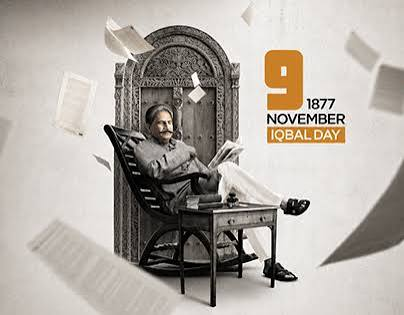
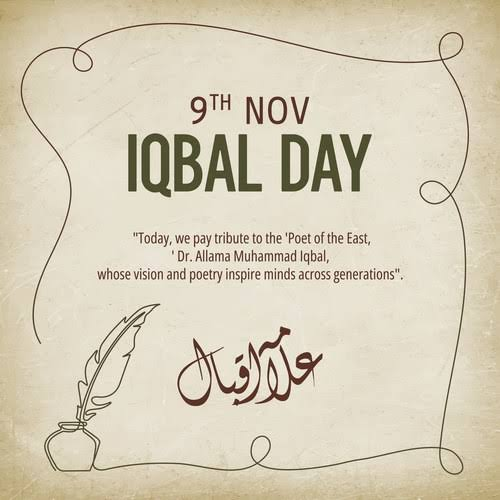
Some people are remembered for what they built. Others are remembered for what they wrote. A rare few are remembered because they changed the way a whole people thought about themselves. Allama Muhammad Iqbal belongs to that third group. He was a poet, philosopher, lawyer and thinker whose words still echo in classrooms, mosques and living rooms across South Asia, nearly nine decades after his death. This year, 9 November 2026, marks his 149th birth anniversary, a fitting moment to look again at the man behind the verses.
Early Life in Sialkot
Muhammad Iqbal was born on 9 November 1877 in Sialkot, then part of British India. His family was of Kashmiri descent. His father, Sheikh Noor Muhammad, was known for his deep religious devotion, and his mother, Imam Bibi, was a quiet but powerful influence on his early years.
Iqbal began his education in a local maktab and later attended Scotch Mission College in Sialkot. There he met his teacher Syed Mir Hasan, who recognized the young student’s sharp mind and love of poetry and encouraged both. Those early years in Sialkot planted the seeds of a lifelong passion for language, faith and ideas.
Education in Lahore, Cambridge and Munich
Iqbal moved to Lahore and studied at Government College, where he completed his BA and MA in philosophy. His teacher Thomas Arnold, a respected scholar, urged him to continue his studies in Europe. In 1905 Iqbal sailed for England, where he studied at Trinity College, Cambridge, and trained as a barrister at Lincoln’s Inn.
He then travelled to Germany and earned a PhD in philosophy from the University of Munich in 1908. His thesis was titled The Development of Metaphysics in Persia. Europe left a deep impression on him. He admired its energy, discipline and love of science, yet he also worried about what he saw as a growing materialism. This mix of admiration and concern shaped much of his later writing.
After returning to Lahore, he taught and practised law while writing poetry that would soon reach readers far beyond the city.
The Poet: Verse That Stirred Hearts
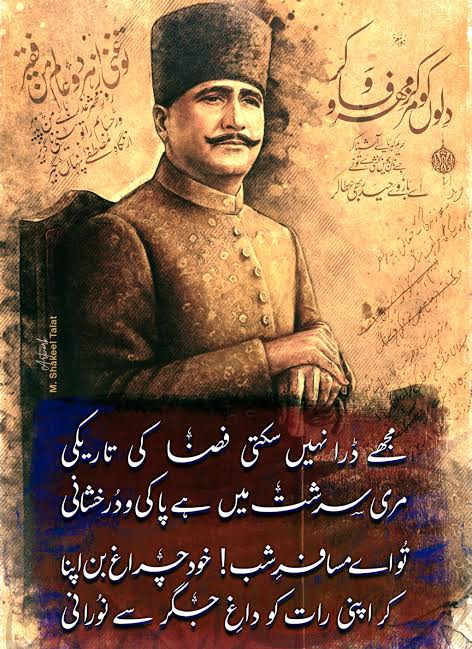
Iqbal wrote poetry in both Urdu and Persian. One of his earliest and best-loved poems is “Tarana-e-Hindi,” better known as “Sare Jahan se Accha,” a patriotic song still sung today. Over time his poetry grew from love of homeland to a broader vision of awakening and unity among Muslims.
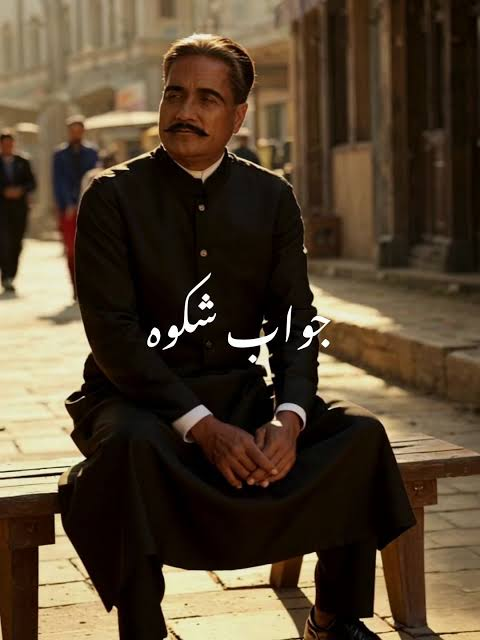
Two daring poems, Shikwa (1911) and Jawab-e-Shikwa (1913), imagine a complaint addressed to God and the reply that follows. They were bold, emotional and widely read, and they showed how fearlessly Iqbal could explore faith.
Some of his most important literary works include:
- Asrar-e-Khudi (The Secrets of the Self)
- Rumuz-e-Bekhudi (The Mysteries of Selflessness)
- Bang-e-Dra (The Call of the Marching Bell)
- Bal-e-Jibril (Gabriel’s Wing)
- Zarb-e-Kalim (The Rod of Moses)
- Javid Nama (The Book of Eternity)
- Armaghan-e-Hijaz (The Gift of the Hijaz)
Each work reflects different aspects of his intellectual and spiritual journey.
Khudi: The Philosophy of Selfhood
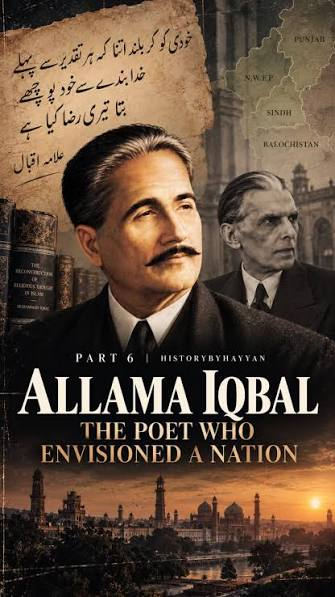
At the heart of Iqbal’s thought is the idea of khudi, usually translated as selfhood. It is easy to mistake it for arrogance, but Iqbal meant something very different. Khudi is the discovery and strengthening of your inner potential: your purpose, your creativity and your sense of worth.
Iqbal believed the self grows through action, struggle, love and discipline. A person who knows their own value, he argued, cannot easily be dominated, whether by outside rulers or by their own doubts. He criticized the passivity and fatalism he saw around him, and he warned against both blind imitation of the West and rigid attachment to outdated habits.
He balanced this idea with bekhudi, or selflessness. A strong individual, he said, should place their strength at the service of the community. His ideal was the Mard-e-Momin, the complete human being: courageous, compassionate, creative and rooted in faith.
Iqbal believed that people should not blame circumstances for every difficulty. They should examine their own actions, improve their character, and work towards positive change.
The Shaheen and Other Symbols
Iqbal often turned to nature for symbols. His favourite was the shaheen, or falcon, a bird that soars at great heights, builds no nest and hunts through its own effort. For Iqbal, the falcon stood for independence, high ambition and self-respect. He often addressed the young directly, urging them to think like falcons rather than settle for comfort and dependence.
He also wrote often about ishq, a deep, driving love that pushes a person toward higher goals. In his work, love is not only romance. It is energy, devotion and the courage to keep striving.
Rethinking Religious Thought
In 1928 and 1929 Iqbal delivered a series of lectures in Madras, Hyderabad and Aligarh. They were published in 1930 as The Reconstruction of Religious Thought in Islam, his major work of prose in English, and an expanded edition followed in 1934.
In these lectures he argued that Islamic thought should remain alive and creative. He encouraged ijtihad, or independent reasoning, so that Muslims could meet new questions with confidence. He engaged openly with modern philosophy and science, showing that faith and inquiry need not be enemies.
A Thinker in Public Life
Iqbal was knighted in 1923 and was elected to the Punjab Legislative Council in 1927. His most famous political moment came in December 1930, when he delivered the presidential address at the annual session of the All-India Muslim League in Allahabad.
In that speech, known as the Allahabad Address, he proposed that the Muslim-majority regions of northwestern India be brought together into a single political unit. Historians still discuss exactly what he intended, whether a self-governing region within a wider Indian framework or something closer to a separate state. But the address became a landmark for the movement that led to Pakistan.
Iqbal also took part in the Round Table Conferences in London, and in the late 1930s he wrote letters to Muhammad Ali Jinnah encouraging his leadership. Iqbal did not live to see what followed. He died in 1938, two years before the Lahore Resolution of 1940 and nine years before Pakistan’s creation in 1947.
Iqbal's Message to the Youth
Iqbal placed great confidence in young people. He believed that they had the energy, imagination, and courage to shape the future of society.
His poetry encouraged them to develop strong character and avoid becoming prisoners of fear or limited thinking.
His message is particularly important in today’s world.
Young people now have access to information, education, technology, and global opportunities. They can learn new skills, start businesses, conduct research, and connect with people across the world.
But opportunities alone do not guarantee success.
Iqbal’s philosophy reminds young people that progress requires discipline, effort, patience, and a willingness to accept responsibility.
Students should seek knowledge beyond textbooks. Professionals should improve their abilities. Entrepreneurs should create value for society. Citizens should work for justice, peace, and mutual respect.
The real tribute to Iqbal is not simply remembering his poetry. It is putting its positive lessons into practice.
Final Years and Legacy
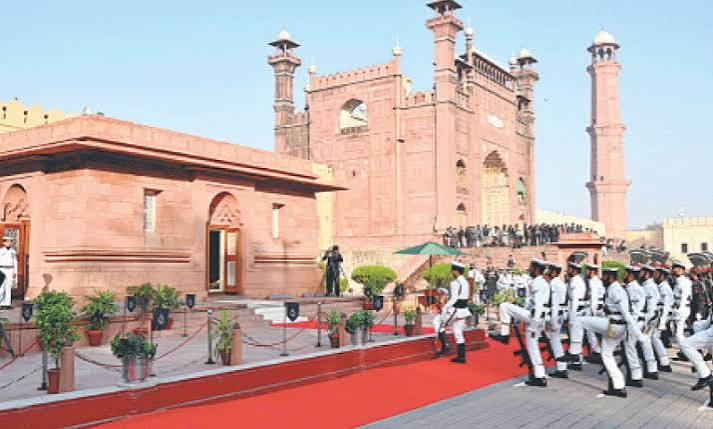
In his later years Iqbal suffered from poor health. He died in Lahore on 21 April 1938, at the age of 60. Large crowds attended his funeral, and he was laid to rest in Hazuri Bagh, beside the Badshahi Mosque. His tomb, Mazar-e-Iqbal, remains one of the most visited sites in the city.
Pakistan honours him as its national poet. He is known by titles such as Shair-e-Mashriq (Poet of the East) and Mufakkir-e-Pakistan (Thinker of Pakistan), and his birthday is remembered each year as Iqbal Day. His influence reaches well beyond Pakistan. In Iran he is admired as “Iqbal-e-Lahori,” and his work is studied in Turkey, Afghanistan and many other countries.
Why Iqbal Still Matters Today
Iqbal wrote for his own time, but his message feels strikingly modern. A few of the lessons that continue to resonate:
- Believe in your potential. Khudi is a call to know your worth and develop it through effort, not wait for someone to hand you opportunity.
- Think for yourself. Iqbal valued questions and independent reasoning over blind imitation, whether of the past or of the West.
- Act, don’t despair. His poetry rewards courage, persistence and purposeful action over passive hope.
- Strength serves others. Personal growth matters most when it benefits the wider community.
For young people searching for direction, these ideas remain as fresh as when they were first written.
Conclusion: Let Us Follow the Message of Iqbal
Allama Muhammad Iqbal was a remarkable poet, philosopher, scholar, and visionary. His words encouraged individuals and communities to recognise their potential and work towards a better future.
His philosophy of Khudi teaches us to develop confidence through knowledge, discipline, and strong character. His symbol of the Shaheen reminds us to pursue meaningful goals with courage and independence. His political vision contributed to the intellectual foundations of Pakistan.
Today, as we celebrate Iqbal Day, we should ask ourselves an important question: Are we following the principles he taught?
Are we encouraging education? Are we developing our abilities? Are we treating others with dignity? Are we working honestly for the progress of our country?
These questions make his message relevant to every generation.
Let us honour his memory by turning inspiration into action. Let us promote education, knowledge, tolerance, justice, and hard work.
Iqbal’s poetry continues to remind us that individuals can shape their future through determination, self-respect, and purposeful action.
Happy Iqbal Day!
May the message of Allama Muhammad Iqbal continue to inspire generations to seek knowledge, build character, and contribute positively to humanity.